What it is
Gum pigmentation is the build-up of melanin in the gums, giving them a dark or uneven tone. It’s entirely benign, but it can affect the appearance of the smile when a lot of gum shows while speaking or smiling. Depigmentation safely removes that surface layer.
How it’s done
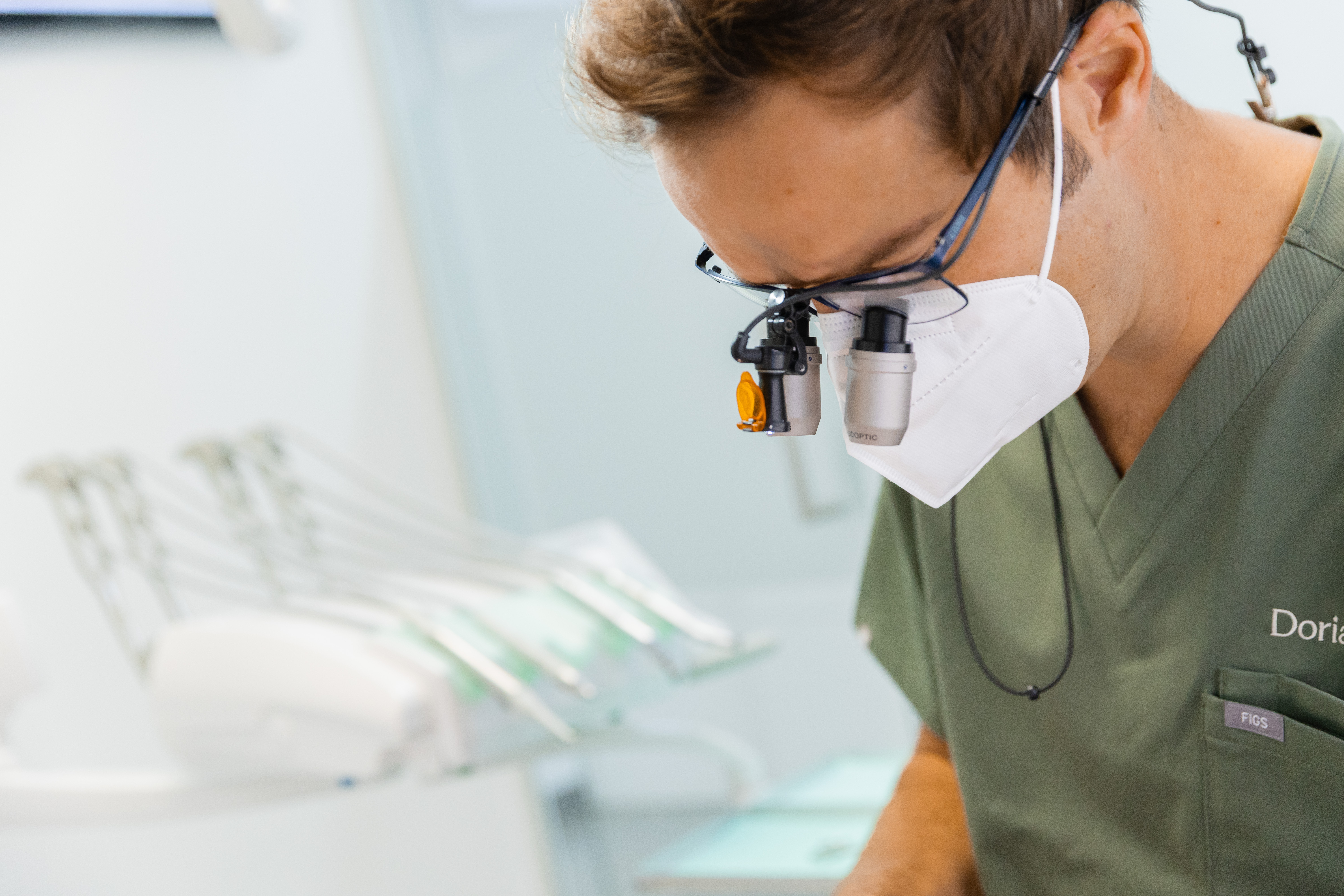
Depending on the case, we use laser or a minimally invasive surgical technique to remove the pigmented layer of the gum. It’s an outpatient procedure, under local anaesthesia, within our periodontics area.
Aftercare
For the first few days it’s normal for the gum to feel more sensitive; avoid very hot, spicy or acidic food and keep up gentle hygiene with a soft brush until it’s fully healed. It’s a common treatment within a broader dental aesthetics plan.
- Gums with dark patches or uneven pigmentation affecting the appearance of the smile
- Good underlying periodontal health, with no active inflammation
- Wanting a more even-toned smile without treating the teeth
What the process of Correcting Dark Gums looks like
- Periodontal assessment We confirm the gums are healthy before any cosmetic procedure.
- Depigmentation We remove the surface layer of melanin with laser or a surgical technique, depending on the case.
- Guided healing The gum heals to a lighter, more even tone within a few weeks.
Frequently asked questions about Correcting Dark Gums
Does gum pigmentation come back?
In some patients, especially smokers, it can partially reappear over the years. If that happens, treatment can be repeated.
Is it a painful treatment?
It's carried out under local anaesthesia, so you won't feel pain. Healing is similar to a small wound on the gum.
Can it be combined with other cosmetic treatments?
Yes. It's often combined with teeth whitening or veneers as part of a comprehensive aesthetic plan.
Treatments related to Correcting Dark Gums
Crown Lengthening
A surgical technique that exposes more healthy tooth structure, needed for prosthetic restorations on worn teeth or to correct a gummy smile.
View treatment →Gum Graft
A tissue graft to cover the exposed root of receding gums, using minimally invasive techniques and local anaesthesia, improving sensitivity and the appearance of the smile.
View treatment →Periodontal Microsurgery
Periodontal surgery carried out under magnification with a microscope or high-power loupes, with minimal incisions to treat the gum with greater precision and a faster recovery.
View treatment →Periodontal Bone Regeneration
Regenerating bone lost to periodontitis using grafts and membranes, to restore the tooth's bone support and halt the progression of gum disease.
View treatment →





) (1).jpg)
.jpg)

.jpg)
.jpg)
.jpg)
.jpg)